





Society
- Shareholders and
Investors - Employees
- Business Partners
- Local Communities
- Safety / Environment /
Disaster Prevention / Product Quality
Shareholders and Investors
Approach
The Company discloses important information for investment decisions in a timely and appropriate manner, and promote understanding of the Group through various engagement activities.
We disclose the reference material of a financial results briefing session, which is held twice a year, and upload related videos and transcripts onto the website.
In 2025, we held our first company information session for individual investors and Kashima Plant tour for individual shareholders. We will continue to organize information sessions and other events for individual investors, providing them with opportunities to deepen their understanding of our businesses.
Means of communication
- Financial results briefing session (February and August)
- 1-on-1 meetings (23 times in fiscal 2025)
- Briefing for individual shareholders (held on October 9)
- Plant tour for shareholders for individual investors (held on November 11)
- Start of the IR email distribution service
Initiatives
Information session for individual investors
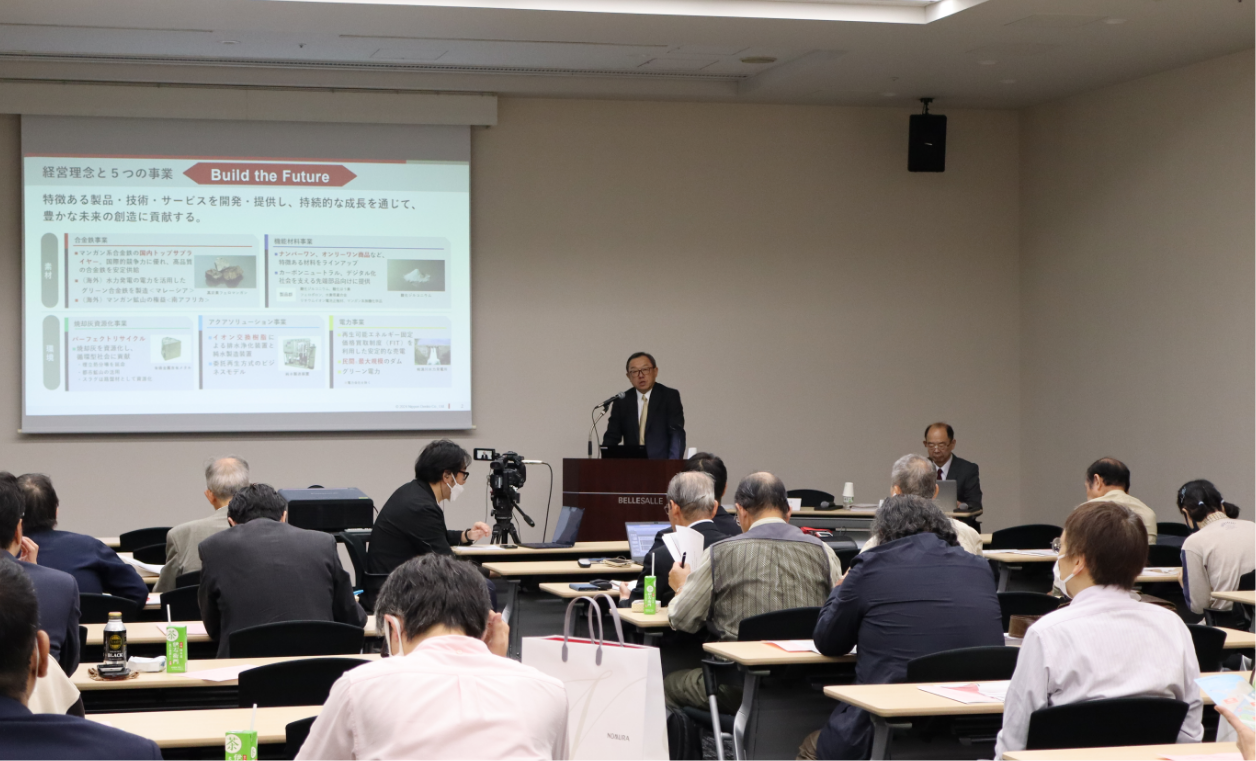 Scene from the information session for individual investors
On October 2, 2025, we participated for the first time in a joint information session for individual investors hosted by Nomura Investor Relations Co.,Ltd. In front of approximately 180 investors, President & CEO Aoki explained the Company’s overview and growth strategy, followed by a Q&A session. We attracted plenty of attention for the Incineration Ash Recycling business, and we received questions regarding barriers to entry by competitors and future growth prospects. We acknowledge that our businesses are unfamiliar to the general public, and it is difficult to understand the whole picture as we operate five different businesses.However, through a survey conducted later, including viewers of the archived video and others, we learned that approximately 90% understood the content of the session, and many indicated that they would like to consider investing. The materials from the session are available on the “To Individual Investors” page of our website.
Kashima Plant tour
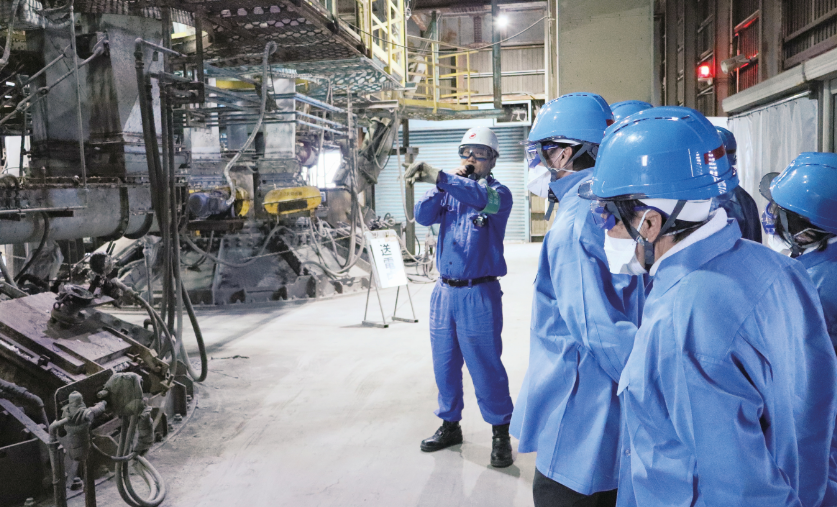 Observing the incineration ash melting furnaces Nippon
On November 11, 2025, we held our first plant tour for shareholders, inviting a total of 20 people, composed of shareholders and their families, to the Kashima Plant, which is the base for the Incineration Ash Recycling business. After Plant Manager Hirata gave an overview of the Kashima Plant and the Incineration Ash Recycling business, they observed the melting furnaces in person. During the tour, we received a wide range of questions about the expansion of the collection areas for incineration ash, the cost structure, the proportion of products made from recycled incineration ash, and so on.In the post-tour survey, we received positive feedback, indicating that observing the facility on site helped them better understand the business, and that they were able to feel potential for the business.
Employees
Approach
Human resources are the source of our competitiveness and we promote initiatives in human capital management.
Means of communication
- Engagement survey
- Enhancement the human resources system
- Enhancement of education and training
- Dialogue with labor unions
Business Partners
The Group promotes collaboration, coexistence, and mutual prosperity throughout its supply chains based on the “Partnership- Building Declaration,” and engages in fair and equitable trade based on its management philosophy. Additionally, based on our basic policy for procurement, we work with our suppliers to engage in procurement activities that account for compliance, reducing environmental impact, respecting human rights, standards, and other social responsibilities, and to promote efforts to combat climate change and other environmental issues, respect human rights, and resolve other social issues.
| 1 | Rigorous compliance | We have established systems for rigorous compliance and make efforts to observe laws, regulations, and social norms. |
|---|---|---|
| 2 | Consideration for reducing the environmental impact (global environment) of procurement activities |
We make efforts to reduce the impact of our procurement activities on the global environment. |
| 3 | Respecting human rights, consideration for work environments | We respect the human rights of each and every individual in our supply chains in accordance with the Nippon Denko Group Basic Policy on Human Rights. |
| 4 | Providing opportunities for competition through fair and equitable trade | We comply with Antimonopoly Act and other laws and regulations for fair trade and engage in procurement activities in accordance with wholesome commercial customs and social norms. We do not engage in unfair trade that exploits our superior position. |
| 5 | Ensuring the safety and competitiveness of our products and services | We place the utmost priority on ensuring the safety of our products and services and take steps to improve competitiveness in terms of quality, price, and turnaround. |
| 6 | Response mineral procurement | We promote the establishment of supply chains free of minerals mined from regions under conflict or plagued with human rights violations. |
| 7 | Establishing trust-based relationships | We establish trust-based relationships with our suppliers through the aforementioned activities in an effort toward coexistence and mutual prosperity. |
Local Communities
Approach
For the Company, which has plants and offices at six locations in Japan, communication with local communities is extremely important for smooth business operations. Furthermore, given the declining birth rate and aging population, which are leading to a decrease in the younger generation, it is important for the Company, which provides products and services to businesses, to increase its presence in each region in order to secure human resources. With the aim of enhancing our regional presence, we will strive to engage in communication with local communities more actively than ever.
Means of communication
- Participation in local events
- Measures to raise awareness in areas where we operate our plant
- Club partner of the Kashima Antlers FC
- Silver sponsor of the Ibaraki Robots
- Naming rights (Tokushima University and National Institute of Technology, Ibaraki College)
 Ceremony at National Institute of Technology, Ibaraki College
Naming rights of school facilities
With the aim of improving corporate brand recognition, we acquired naming rights for facilities at Tokushima University and National Institute of Technology, Ibaraki College. This is our first time implementing such a measure. We lent our company name to places where many students gather and interact, such as a library in Tokushima University and a plaza and a cafeteria in National Institute of Technology, Ibaraki College, as nickname. This was first implemented as part of our efforts to secure talent. We strive to improve corporate brand recognition in the areas where the Tokushima Plant and the Kashima Plant are located, and to become a company that is rooted in and loved by local communities.
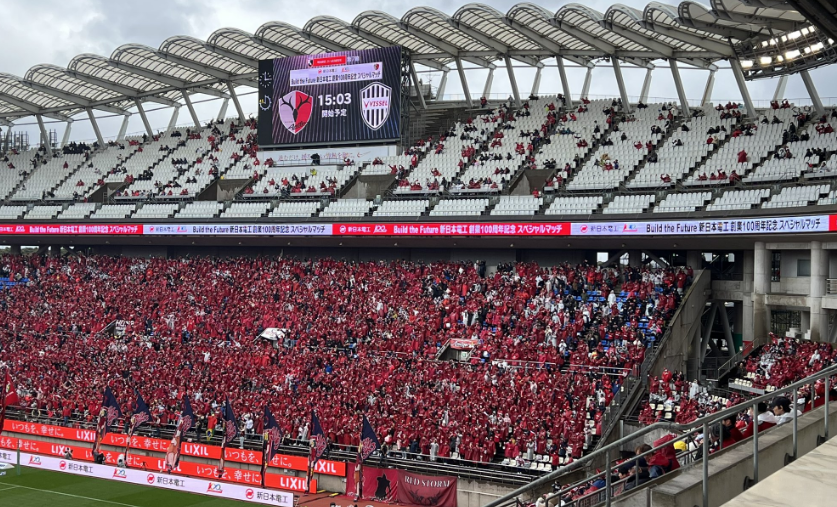
 Nippon Denko event booth on the day of the sponsored game
Sponsored game for the Kashima Antlers and invitation event for high school students
We have been supporting the Kashima Antlers as a club partner since 2023.Following our sponsorship in 2025, we sponsored a match on March 22,2026, during the 8th round of Regional Round East of Meiji Yasuda J1 100 Year Vision League. On the day of the event, we decorated the stadium and President & CEO Aoki participated in a kick-off ceremony to promote the Company’s name and logo, and many Antlers supportersvisited our event booth. Furthermore, in order to raise corporate brand recognition in recruitment activities, we are continuing the program where we invite ten high school students to every Kashima Antlers home game also in this season. This project has also been well-received, and we have received applications from many high school students.
Safety / Environment / Disaster Prevention / Product Quality
Safety and health
The Nippon Denko Group is augmenting its occupational safety and health management system and engaging in activities to ensure the safety and health of its employees under the safety and health basic policy.
Basic policy
- Respect human life in the execution of all operations under the assumption that ensuring safety and health is the utmost priority
- Strive to prevent work-related accidents under the belief that prevention is the foundation of safety and health management activities
Creating a safe and secure workplace
| Target | |
|---|---|
| Number of lost-time or worse injuries | 0 |
We believe that it is important to predict and mitigate risks when preventing work-related accidents, and consider “reliably predicting hazards” and “identifying and addressing risks” as important measures for safety activities. In 2025, in order to create a safer and more secure working environment, the plants and head office worked together to thoroughly implement hazard prediction when work content changes, identify potential risks on site, and revise work standards. As a result, the number of lost-time or worse injuries decreased from five in 2024 to two, but it did not reach the goal of zero.
Hazard prediction for each step
To achieve zero lost-time or worse injuries, we have been utilizing a new method called “hazard prediction for each step” since 2026. This approach differs from the conventional method, where intensive measures are implemented on work steps while categorizing them according to their risks. Instead, we take measures against all risks identified in each step of the manufacturing process. With this approach, we will endeavor to prevent “accidents that could have been avoided with a little more care,” which have been a prevalent trend for recent years.
Video-based work standards
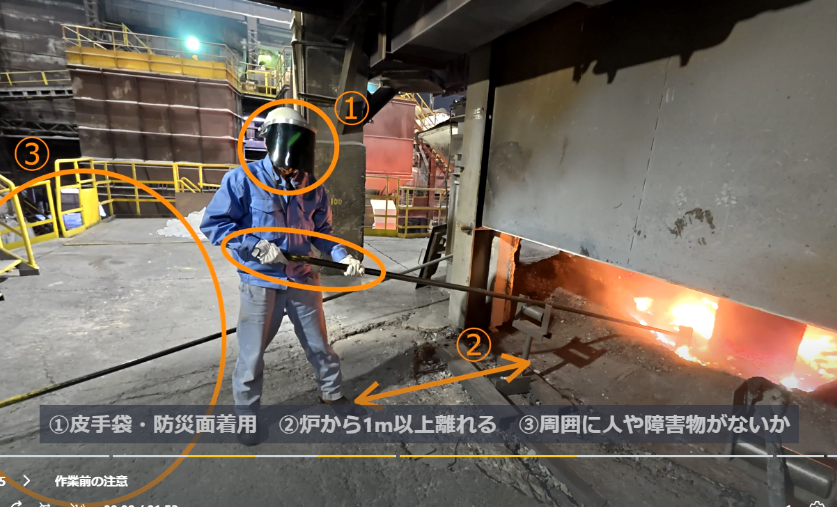
the work knowledge and skills, we are sharing the video-based work standards, which were introduced on a trial basis at the Toyama Plant, with the other plants. As video-based work standards contain more information than written manuals, even detailed tasks that were difficult to explain can be easily conveyed, improving learning efficiency. Furthermore, we have established a system that allows employees to receive training regardless of time or location by using their mobile device, which is especially beneficial for younger employees with less experience, as they can receive the same training repeatedly. This system is expected to accelerate their acquisition of accurate work skills.
The Group will steadily implement these measures and actively promote initiatives to ensure the safety of the employees.
Acquiring certification from third-party organizations
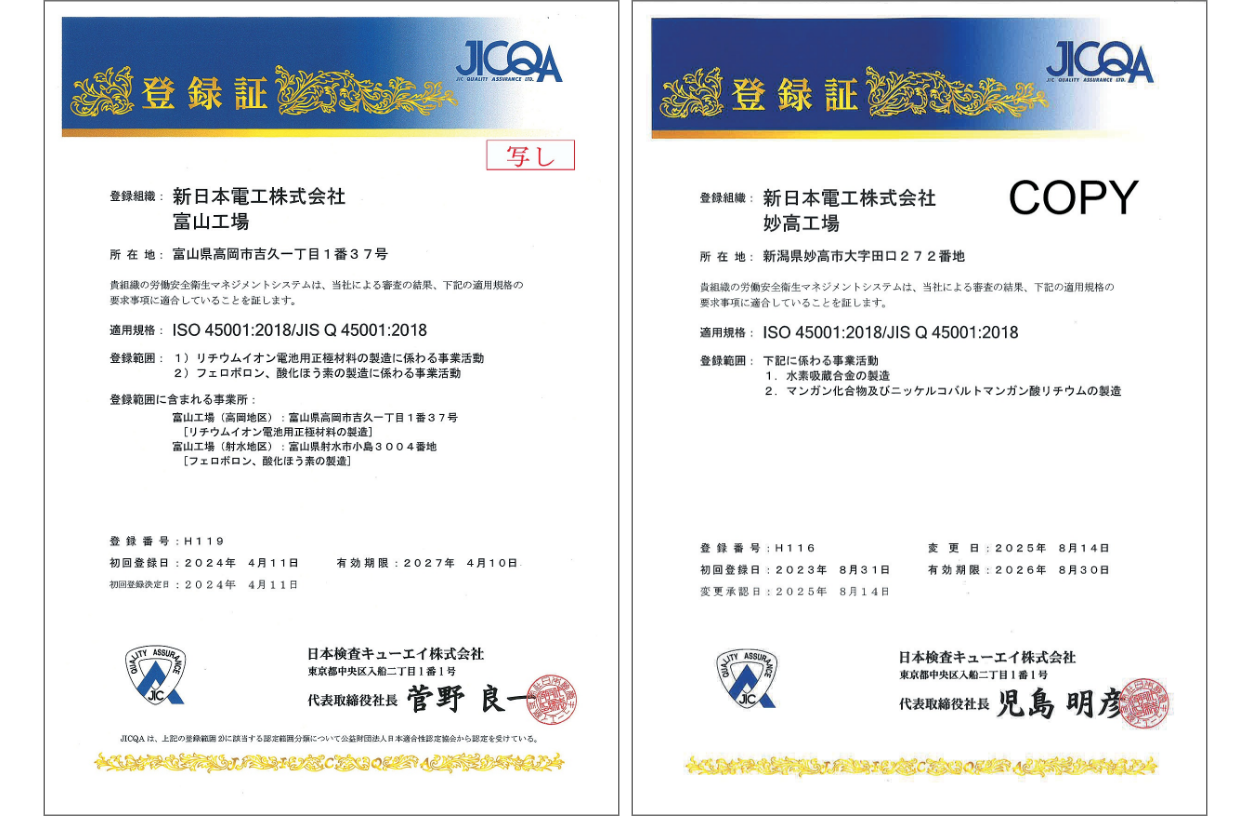
The Group uses its ISO 45001 management system to create a structure for eliminating work-related accidents and other forms of risk with the aim of creating work environments where employees can work with a sense of safety and security. We obtained the certification for the Myoko Plant in August 2023 and for the Toyama Plant in April 2024 for a total of 4 plants including the already certified the Tokushima Plant and the Kashima Plant.
We will make continuous efforts to get the certification for all of our six plants.
Creating comfortable workplaces and promoting physical and mental health
The Group promotes new 5S training and makes other efforts to ensure and maintain comfortable work environments, and steadily implements measures to improve facilities with the aim of preventing occupational diseases. We also promote employee health care through measures such as coordinating with industrial physicians to accommodate work style reform, conducting stress checks and promoting measures for mental health, and raising awareness about the many ways to prevent lifestyle-related illnesses, lower back pain syndrome, and the loss of physical capacity.
Disaster prevention
The Group has established systems for disaster prevention management and disaster response and banded together to engage in other disaster prevention activities to enhance each and every employee’s capacity for disaster prevention with the aim of eliminating disaster response incidents.
Disaster risk prevention activities
The Group has established manuals and conducts drills for responding to typhoons, earthquakes, tsunami, and other natural disasters, and also takes steps to reduce risk in responding to fires, explosions, and other plant disasters, specifically by conducting risk assessments in each location to identify disaster risks, deploying technical and organizational measures to reduce the risks and managing any residual risks, and conducting various drills (e.g. general disaster prevention drills, first-response drills for fires).
| Target | |
|---|---|
| Number of disaster response incidents | 0 |
Product quality
Under our Basic Quality Policy, the Group promotes activities to improve quality and enhance trust with the aim of providing products and services that satisfy customers.
Basic policy
- Comply with laws and regulations
- Consistently provide products and services satisfying each customers’ requirements
- Reduce risks of improper cases regarding quality assurance
- Continuously improve quality management systems
Quality management
The Group has established a quality management system based on ISO 9001, and all employees involved in manufacturing and services work together to promote its implementation. By utilizing this system and appropriately managing the entire process of providing products and services to our customers, we aim to continuously deliver high-quality value.
Quality management activities are led by the product quality assurance departments at each plant, which promotes autonomous operations. When issues arise, we work closely with our head-office divisions to ensure a swift and appropriate response. We also implement a continuous training program to ensure that all employees are familiar with the importance of complying with quality standards and basic rules. Furthermore, we identify and correct quality risks through internal quality audits and quality patrols, thereby raising employee’s awareness of quality and working to prevent quality issues before they occur.
In addition, we are actively addressing issues such as standardization, systematization, and automation. This allows us to improve the reliability of testing and inspection related to product shipment and strengthen our system for providing peace of mind and trust to our customers.


